
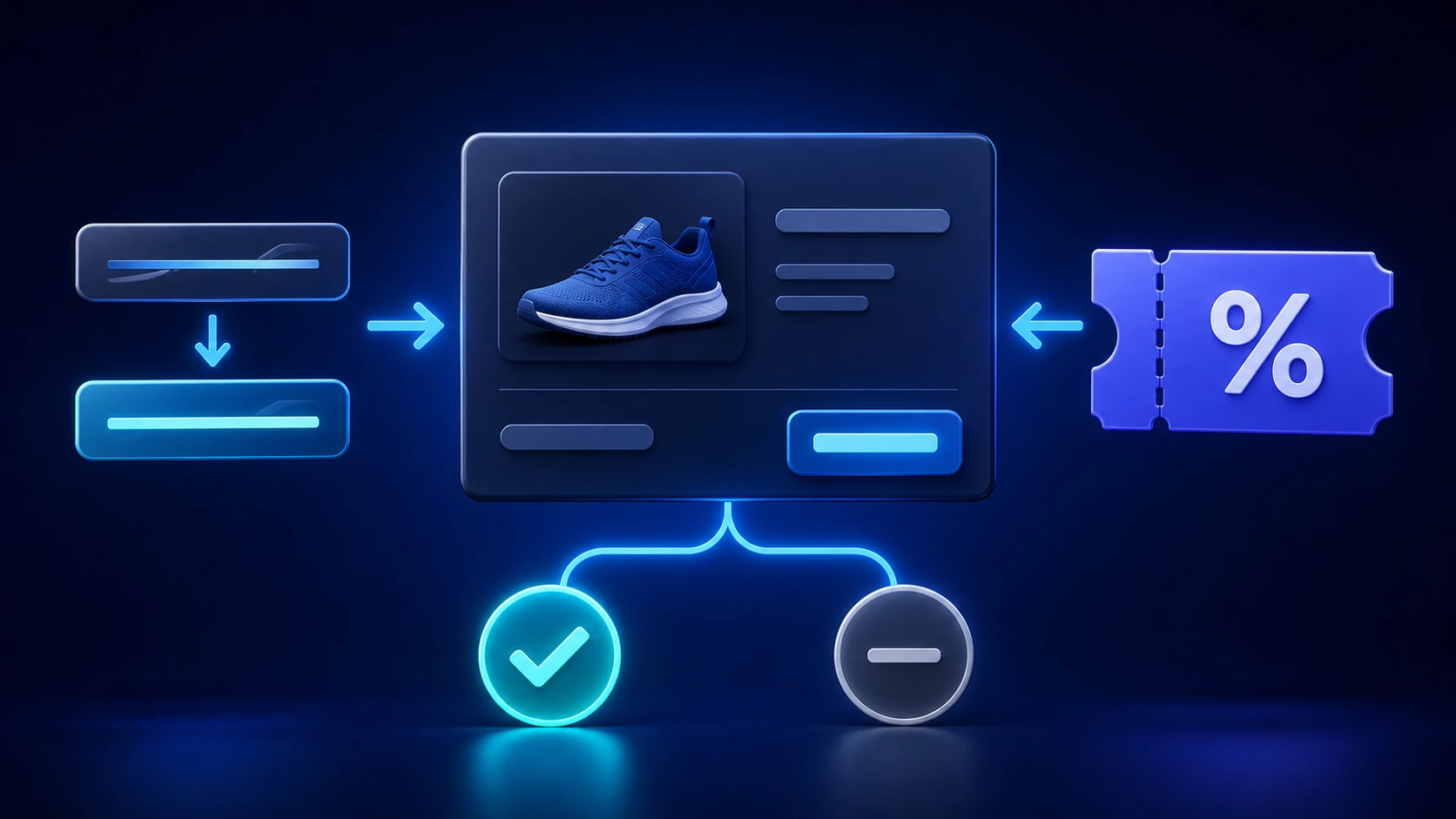
There is no retailer-wide yes or no. A promo code may reduce an existing sale price, apply only to full-price merchandise, exclude clearance, or work on some lines in a mixed basket. The reliable answer is the itemized checkout calculation before payment—not the presence of a coupon box and not an “accepted” message by itself.
The key is to separate the price mechanism from the coupon. A crossed-out price, an automatic cart promotion, clearance, and a limited event price can look similar on a product page while following different rules. Test the exact code against the exact basket you intend to buy.
Use an evidence ledger instead of guessing
| Checkpoint | Record before the code | Record after the code | What the result proves |
|---|---|---|---|
| Line price | Regular and current price for each item | Any extra item-level adjustment | Whether the code reached that product |
| Eligible subtotal | Total of products that meet the terms | Discount compared with that subtotal | Whether mixed-basket exclusions explain the amount |
| Existing promotion | Automatic saving already shown | Whether it remains after code entry | Whether the code stacked, replaced, or was rejected |
| Final total | Merchandise, shipping, tax, and fees | The same components after recalculation | The actual saving before payment |
Four decisions that determine the answer
What kind of reduced price is it?
A normal markdown may be eligible while clearance or a named event is excluded. Macy’s, for example, identifies special event prices that may not accept additional promotional codes. Ulta Beauty describes broad coupon eligibility alongside brand, service, clearance, and promotional-event exclusions. These are merchant examples, not universal rules.
What does this particular code exclude?
Read the offer terms for product, brand, seller, account, country, channel, and minimum-spend limits. Nike directs shoppers to the details and exclusions of the specific promotion. ASOS likewise explains that codes can have product, account, and country conditions and excludes several order components. A general store policy cannot replace the code-specific terms.
Which amount is used for a threshold?
A minimum spend may use the current basket value, the regular value of qualifying merchandise, or another defined subtotal. Bath & Body Works explains that certain item-offer thresholds use regular price even when a product is on sale. Treat that as evidence for those offers only; another merchant can calculate the threshold differently.
Did the payable total actually fall?
Apply the code before submitting payment and inspect the adjustment lines. A code can be technically accepted while producing no additional saving because the basket is ineligible or another promotion already gives the permitted result. If nothing changes, work through the promo-code troubleshooting guide before assuming the code applies to sale merchandise.
A controlled checkout experiment
Start with the finished basket: correct variants, quantities, delivery destination, and shipping method. Write down each current price, the merchandise subtotal, existing promotions, shipping, tax or fees, and the amount due.
Next, classify every reduced item as a regular markdown, automatic promotion, clearance, or named special event. Then divide the basket into likely eligible and excluded lines using the exact coupon terms. Enter the code once and let the checkout recalculate.
Now compare three outcomes. If an additional adjustment appears and the old sale prices remain, the code stacked with the markdown for those lines. If the earlier saving disappears, the code replaced another benefit and the two totals must be compared. If the code is rejected or changes nothing, it did not produce a verified additional saving for that basket.
Repeat the check after sign-in, delivery selection, or a payment-method change because those steps can alter eligibility. Stop before placing the order. Saving a screenshot of the terms and itemized total is more useful than saving only a promotional banner.
Mixed baskets: calculate the eligible subtotal
Suppose an order contains a $40 full-price item, a $30 sale item, and a $20 clearance item. A 10% code covers the first two but excludes clearance. The eligible subtotal is $70, so the expected reduction is $7—not $9 from the full $90 basket. This is a teaching example, not a claim about a named retailer.
If checkout shows a $4 reduction, the code may have reached only the full-price line. If the sale item returns to $40 after code entry, compare the total with and without the code. The larger advertised percentage can still be the worse option when it cancels an existing markdown.
How official policies differ
adidas states that some promotion codes exclude sale products and suggests testing an eligible full-price item when that exclusion applies. Bath & Body Works separates automatic offers from code-based offers and states that one promo code can be used online, while compatibility still depends on the specific offer. Macy’s distinguishes event pricing, and Ulta Beauty lists product and event exclusions.
Together, these policies support one practical conclusion: “sale item” is not a complete eligibility category. The named event, product scope, threshold basis, and checkout calculation all matter. A rule from one merchant should never be generalized to another.
Fast diagnosis by symptom
Accepted code, unchanged total: expand the adjustments and inspect excluded lines.
Sale price disappears: remove the code and compare both versions of the same basket.
Minimum spend error: confirm which prices and order components count toward the threshold.
Only part of the order is discounted: isolate the eligible subtotal and recalculate the expected saving.
Written terms and checkout disagree: preserve both before payment and ask the retailer to clarify.
Never give support a password, full payment-card number, or one-time verification code. CouponX can help you find an offer and understand the test, but the retailer controls the final calculation. You can review current Nike offers or Bath & Body Works offers, then verify the merchant’s own restrictions at checkout.
Questions shoppers usually ask next
Does a coupon always use the sale price as its base?
No. It may use the current price, a defined eligible subtotal, a regular-price threshold, or exclude the item. The terms and itemized calculation provide the answer.
Can I verify this without completing the purchase?
Usually. Continue to the final review, inspect the adjustments and total, and stop before submitting payment.
Why did only one product receive the discount?
Other products may be excluded by brand, seller, category, price type, promotion, or account condition. Match each line against the specific terms.
Is an automatic cart promotion the same as a sale price?
Both reduce the shopper’s cost, but they can be separate checkout mechanisms. Test whether the automatic adjustment remains after the code is entered.